The Spare Minute: How Departure Buffers Became Part of the Commute
Departure buffers make a regular commute less brittle: learn where ordinary delays come from and how to choose a margin that fits your day.
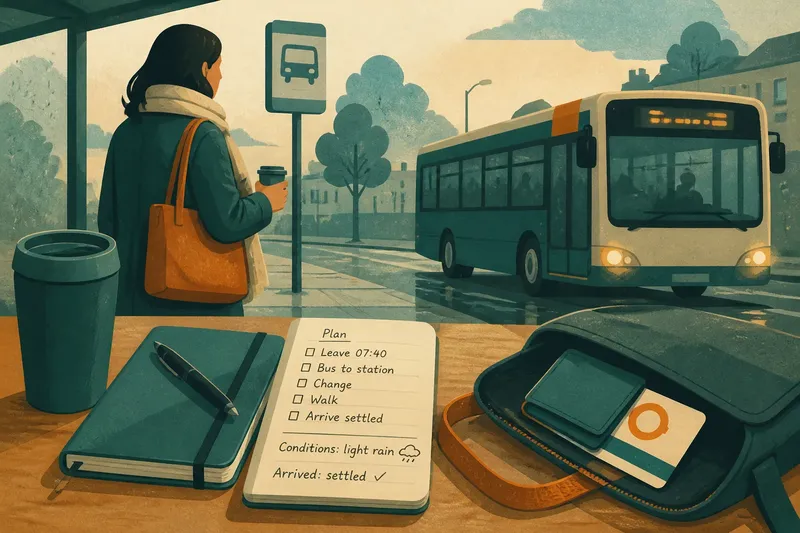
The common mistake with a regular commute is leaving at the exact time the journey ought to take. That tidy calculation has no room for a slow lift, a crowded ticket gate or a bus that arrives just after you do. A departure buffer gives those ordinary snags somewhere to go, so one small delay need not take the rest of the morning with it.
A buffer is planned slack between leaving home and needing to be somewhere. It is not a prediction that every trip will go wrong, and it is not an invitation to hurry. The useful margin depends on the journey, the appointment and what happens if you arrive a little early. Treat it as a feature of your commute rather than spare time you have somehow failed to use.
Why an exact departure time keeps letting you down
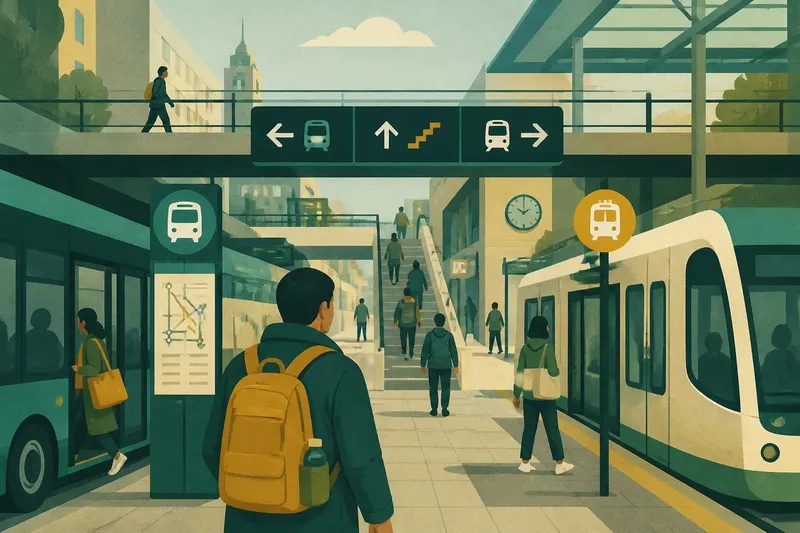
Journey planners tend to describe a route as a sequence of expected movements. Your actual trip also includes small transitions: locking the front door, getting to the stop, finding the right platform, boarding and reaching the entrance at the other end. Each may be straightforward on its own. Together they make an exact timetable fragile.
There is also a difference between a delay that changes the journey and one that merely makes it feel awkward. A crowded tram may add a little time but still get you there comfortably. Missing the last useful bus before a shift, on the other hand, could leave no workable alternative. A sensible buffer responds to the consequence of being late, not just the number shown in a route app.
Say you usually take a bus to a morning appointment and the walk from the stop is short. If you leave only enough time for the bus’s expected trip, a queue at the stop or slow traffic can consume the whole margin. Leaving earlier by a modest amount might let you arrive with time to check in rather than watching the clock from the pavement. The point is not that this will prevent every delay; it is that the delay has less power over what happens next.
When does a commute need more slack?
What makes a familiar route unreliable?
Familiarity can hide the parts of a trip that vary. A bus may be more crowded on certain weekdays, a station entrance may be busy at school-run time, or a walk may slow in heavy rain. Notice the conditions attached to your usual journey, rather than treating one smooth morning as the template.
Should an important appointment change the buffer?
Usually, yes. If arriving late would mean missing a booked slot, briefing or handover, build in room for the consequences of delay. For a flexible arrival, such as a casual visit with no fixed start, a smaller margin may suit you better.
Does leaving earlier always help?
No. An earlier departure can mean a longer wait in an exposed stop or an awkward stretch of unpaid time before a shift. Look for a margin that protects the arrival without making the rest of the journey needlessly uncomfortable.
How can you tell whether the buffer is too large?
If you routinely arrive far ahead of any useful opening time and have nowhere pleasant to wait, the margin may be oversized. If ordinary hiccups repeatedly make you rush, it may be too small. A short note about arrival and delay conditions can help you adjust it without turning each commute into a calculation.
Find the point where small delays gather
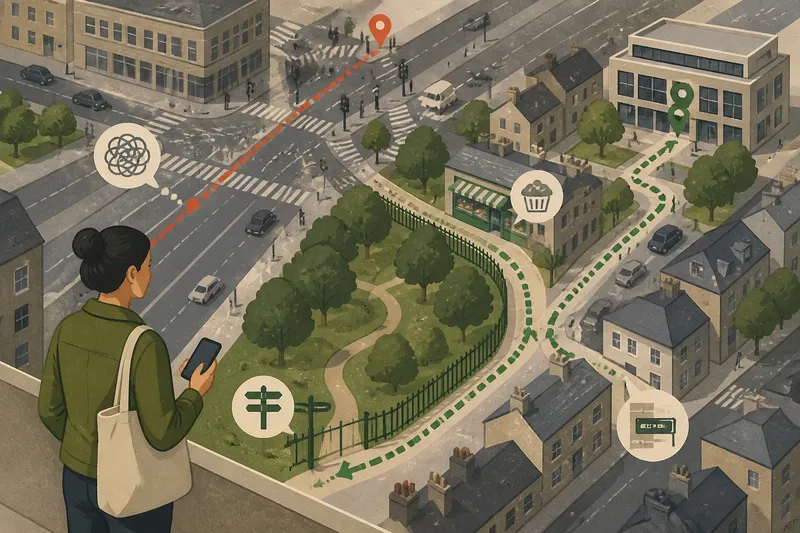
When a commute feels brittle, identify its tightest transition. It might be the walk from home to a bus stop, the gap between a train arriving and a connecting service leaving, or the time needed to cross a large station. Adding slack before that point can be more useful than simply moving every part of the morning earlier.
Separate the journey into pieces you can observe: getting ready, reaching the first stop, riding, changing direction or service, and walking to the destination. Ask where you most often have to hurry. If the answer is the last walk across a station forecourt, an earlier train may not be the first thing to change; leaving home with a little more time for that approach might be enough.
Keep the adjustment small and change one part at a time. If you alter the departure, route and mode together, it becomes difficult to tell which change helped. A calendar note or a simple line in your phone’s notes app can record the planned departure, the day’s conditions and whether you arrived settled or rushed. You are looking for a useful pattern, not a perfect log.
Match the margin to the kind of day
A single departure time may not suit every weekday. A day with a fixed start, a heavy bag or a school drop-off has different constraints from one with a flexible arrival and a nearby café where you can wait. Make a small number of versions of the same routine if that makes decisions easier: an ordinary departure, a more cautious one for a fixed commitment, and a fallback for disruption.
For a fallback, decide in advance what information would make you switch plans. You might check the operator’s service alert before leaving, or use a walking route to a different stop if the first service is suspended and the alternative is practical. Keep the fallback simple. A plan that requires several hurried decisions can create more friction than the delay itself.
Waiting is part of the calculation too. A sheltered station concourse, library foyer or café may make arriving early feel manageable, while an exposed platform in poor weather may not. You do not need to buy anything or fill every spare moment; a book, headphones or a quiet place to stand can make a modest arrival margin more comfortable.
What to try when the buffer is not working
- You still arrive rushed: Check whether the pressure comes from the route or from getting out of the door. Move the departure earlier slightly, or prepare one avoidable item—such as a travel card or bag—the night before.
- You arrive too early to do anything: Reduce the margin or choose a more useful place to wait. Check opening times before relying on a café or building lobby.
- One particular service causes trouble: Look at the operator’s live updates and consider a different departure or a nearby stop. Do not assume that a route shown as available is running normally.
- Weather changes your pace: Allow more time for the exposed walk, slippery paving or a wet coat and bag. A route that is comfortable in dry weather may need a different margin in rain.
- The same delay keeps undoing the plan: Find out whether it is tied to a regular pinch point, such as a school gate or a busy station entrance. A small shift in departure time may avoid the crowd more effectively than a much larger buffer.
Where the right choice depends on an operator’s service information, a building’s access arrangements or local conditions, check those details rather than relying on a general rule.
Keep departure buffers useful rather than automatic
Review the margin when the commute changes: a new work start, a shifted bus timetable, a different stop or a recurring construction diversion can alter where the pinch point sits. There is no need to revisit it every morning. A quick check when something changes is usually more useful than repeatedly adding extra time out of anxiety.
Departure buffers work best when they protect something specific. Perhaps you want to reach a meeting without entering mid-sentence, arrive at a shift ready to start, or avoid a hurried crossing between services. Name that purpose, then give the journey enough slack to make it plausible without turning the wait into a burden.
For a regular commute, the spare minute is not a magic cushion; it is a choice about where your day can absorb friction. Start with the transition that most often makes you rush, adjust the departure modestly, and notice whether you arrive with more room to respond. That small, deliberate margin is often more useful than a timetable that works only on an unusually smooth morning.