Walking Partway or Taking One Mode All the Way?
Walking partway or taking one mode all the way? Compare flexibility, door-to-door effort and the shape of your day before choosing a city trip.
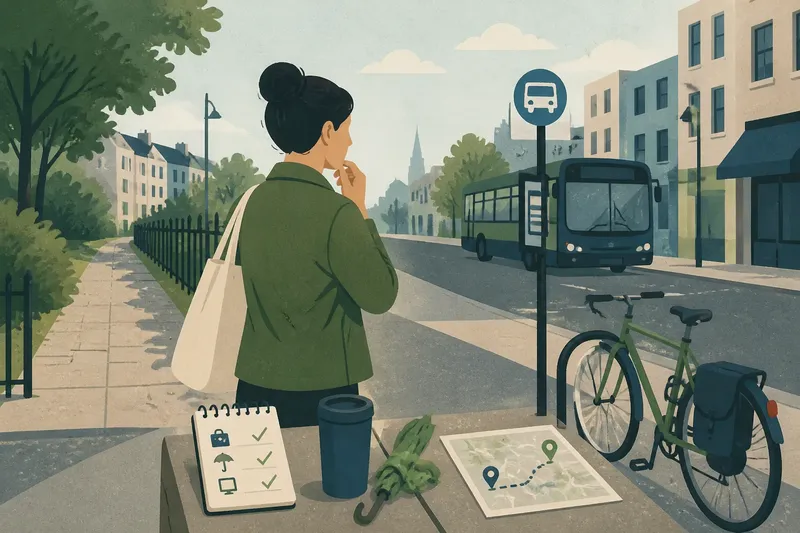
The most common mistake in choosing between walking partway and taking one mode all the way is comparing only the distance on a map. That can hide the effort of waiting, locking a bike, finding a station exit or arriving with a bag that feels heavier by the block. Walking partway or taking one mode all the way works best as a choice about the whole trip and the day you are having.
Start with the trip you actually need to make
Write down the real endpoints: the entrance you will use, not just the street address. A large office block, hospital or station can add a substantial walk between its front door and the point shown on a journey planner. Do the same at the starting end. A bus stop near home may be farther from your door than a different one, while a cycle route may begin conveniently on your street.
Then note what must travel with you. A laptop, shopping, a pushchair or a musical instrument changes what feels manageable. So does the condition of the pavement, the availability of bike parking, and whether your destination has a place to leave wet outerwear. These details can make a short walk easier than a mode change, or make an otherwise pleasant walk an awkward finish.
Pick the single-mode option that is genuinely available from door to door. It might be walking, cycling, a bus or a train. “One mode” does not mean there is no walking at all: most public transport journeys include a walk to and from stops. The useful comparison is between the extra walking you choose to add and the extra handling that another mode requires.
Compare the whole journey, not the moving time
For each option, trace the sequence from leaving home to reaching the destination. Include the walk to a stop, time spent waiting, the ride, any walk at the far end and the final approach to the entrance. For a car journey, account for reaching the vehicle and finding a place to leave it. For cycling, include the route to suitable parking and the walk from there.
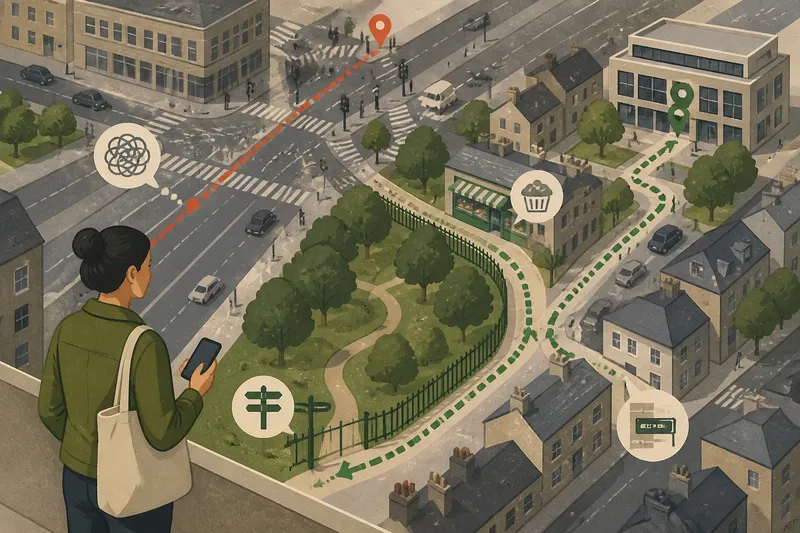
A mixed trip may look longer on a map but feel more adaptable. You might walk to a stop on a familiar street, ride through the busiest part of town, then walk the final stretch. A single-mode trip may be simpler to remember and easier to repeat, but the whole distance can make it tiring or expose you to a stretch that is unpleasant in heavy rain.
Use a local map and a transit app to compare plausible routes, then check the street-level details. Look for crossings, hills, pavement closures, cycle parking and stop locations. An app’s route line can suggest a connection; it cannot tell you whether the walk from the platform to your actual meeting room will be comfortable. Where a route depends on service information or local access rules, check the operator or relevant local authority.
Choose for flexibility and the day’s demands
Walking partway can give you a useful point of adjustment. If you feel fresh, you can walk to the next stop rather than waiting at the first. If the weather turns or you are running low on energy, you can use transit for a section, provided a suitable service runs there. This works best where stops and routes are easy to reach; a long gap between services can make the apparent flexibility mostly theoretical.
A single mode can suit a day when you want fewer decisions. A familiar walk may be calming when you have no luggage and enough energy. A direct bus or train can keep a workday straightforward if you need to arrive with your attention intact. Cycling may suit a trip with convenient parking and a route you are comfortable using. None is automatically the easier choice: the right fit depends on what the journey asks of you, not on the mode’s reputation.
Think beyond the outward leg. Will you be carrying groceries on the return? Do you have a fixed appointment, or can you take a more leisurely route home? Is the journey happening after a long shift? An option that feels easy in the morning may be a poor match when you are tired or carrying more. If the day has different demands in each direction, choose different modes for each leg rather than forcing one rule on both.
Make the decision in a short sequence
- Set the door-to-door endpoints. Use the entrance you will actually use at both ends.
- List what you will carry. Include anything that makes stairs, weather or a longer walk less appealing.
- Compare the complete sequences. Count walking, waiting, riding, parking and the final approach.
- Check the route conditions. Look at crossings, hills, stop access and bike parking in a map or local app.
- Match the option to the day. Consider energy, time pressure, weather and what you will need on the return trip.
- Keep a fallback that is realistic. Know which stop, walking route or other available mode you could use if the original plan stops suiting you.
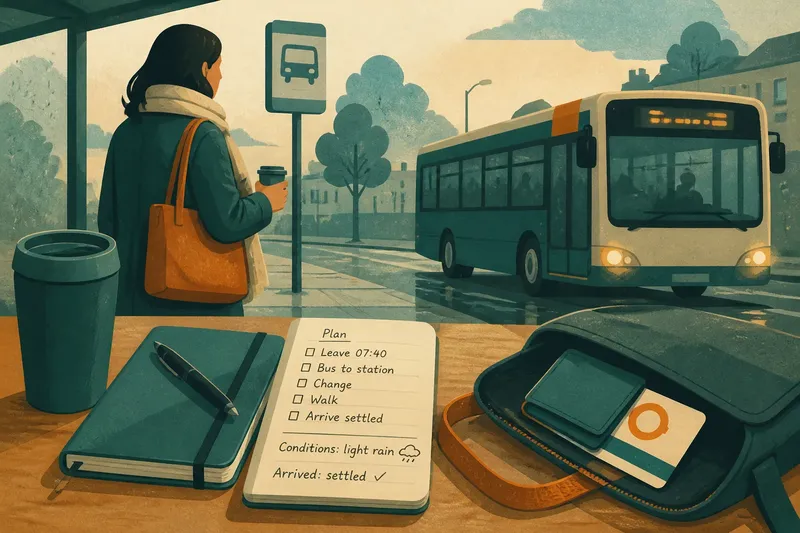
Say you have a compact bag, a familiar bus route and an appointment near its final stop, but the walk from home to the bus is pleasant and direct. You could compare taking the bus from the closest stop with walking to the next stop and riding from there. If the latter route offers a calm walk and leaves you with a short finish, it may feel more comfortable; if rain is setting in, boarding sooner may be the better fit. The useful result is a choice tied to the actual conditions, not a rule that walking farther is always better.
Walking partway or taking one mode all the way? The details that settle it
Is walking partway always slower?
Not necessarily, because the full door-to-door journey includes access and waiting as well as movement. A short walk can replace time spent reaching a less convenient stop, though a longer walk may add effort without helping the route.
When does one mode all the way make more sense?
Choose it when the route is comfortable as a complete journey and it keeps the day simpler, especially if you are tired, carrying awkward items or heading somewhere with a clear arrival point. Check that the final stretch and return trip suit you too.
How should I compare walking with public transport?
Compare the whole journey, including the walk to each stop, waiting, the ride and the walk from the destination stop. A transit app helps with connections, while a street map helps you judge the approaches and crossings.
What if the best option changes during the day?
Let each leg have its own choice. You might walk on the way in and use transit on the way home if your energy, weather or things to carry change.
Use a small trial without turning it into a rule
After choosing, notice one or two concrete things: whether the approach felt easy, whether the final walk was tiring, and whether you had a comfortable way to adapt. Keep the observation tied to the conditions. A route that works on a dry day with an empty bag may not suit a wet evening with shopping.
For a few ordinary journeys, try the option that seems most suitable rather than changing several things at once. If the mixed trip feels clumsy, check whether the issue was the stop location, the walk itself or the extra transition. If one mode all the way feels draining, ask whether the strain came from the full distance or from a particular segment. That distinction points to a more useful adjustment than simply declaring one mode the winner.
Walking partway or taking one mode all the way is a decision you can make afresh as the day changes. Start with the door-to-door route, choose the arrangement that fits your energy and load, and keep an alternative you can actually reach. The best option is the one that gets you there without making the rest of the day harder than it needs to be.