Why a Transfer Changes the Shape of a Journey
A transfer changes more than route length. Weigh the walk, wait, uncertainty and reset involved to choose a city journey that feels easier to repeat.
The common mistake with a city route is to compare only its distance or scheduled duration. A transfer adds a different cost: you must stop one journey, work out the next, and begin again. That effort can make a short route feel awkward to repeat, while a longer ride with a calm, clear change can feel manageable.
To compare routes fairly, look at what each change asks of you: how far you move, how much you must decide, and whether the hand-off between modes is easy to understand. These six points give the transfer a proper place in the journey.
1. Count the change as part of the route
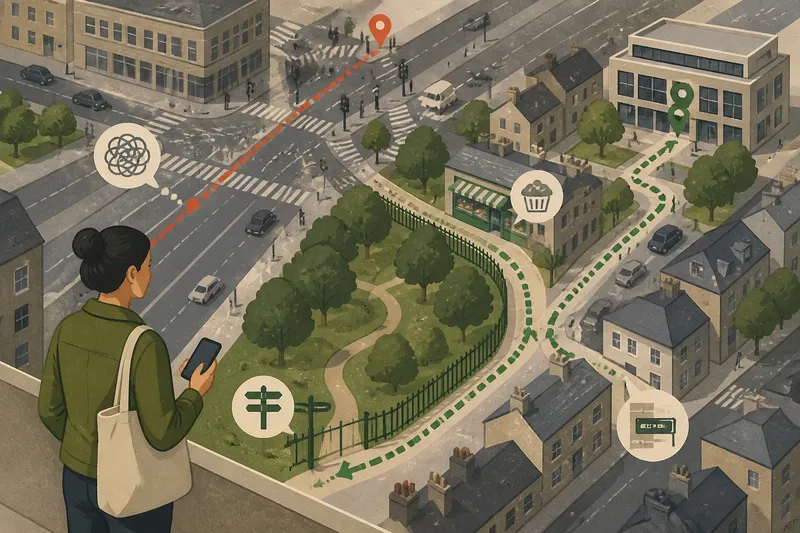
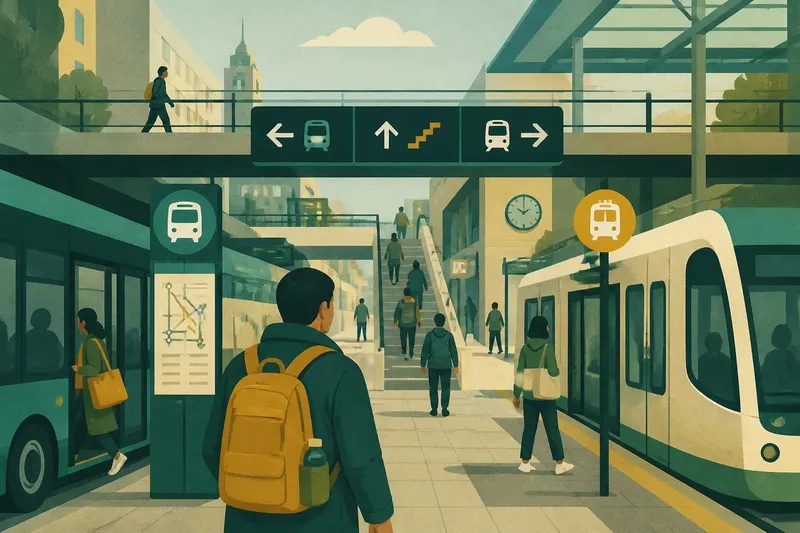
A route planner may draw one neat line between your starting point and destination. On the ground, a transfer is a small sequence: leave a vehicle, find the next platform or stop, wait, then board again. A change from a bus to a tram may involve a short walk across a clear interchange; changing trains may mean stairs, a long passage or finding a different platform.
Compare the whole chain rather than treating each ride as the journey and the gaps as nothing. Ask where you will leave the first service, what you need to reach next, and whether the connection stays within the same station or requires you to use the street. A route map, the local transport authority’s app and station signage can each reveal a different part of that picture.
Imagine your usual trip has a direct bus and a faster train route with a change. If the train route requires you to cross a large station and locate an unfamiliar platform, the apparent time advantage may not feel worth the repeated interruption. That is not a reason to dismiss the train; it is a reason to include the interchange in your comparison.
2. Notice how much attention the transfer demands
Some changes are nearly automatic. You follow a single platform sign, wait in the same station and board the next service. Others require you to track a stop name, switch directions, cross a road or decide which exit to take while people flow around you.
That difference matters because a transfer uses attention as well as time. A familiar interchange may become easy to read, while a busy station with several similarly named platforms can keep asking you to check signs and screens. If you travel with a child, carry shopping or need to keep an eye on a phone call, the more demanding change may feel especially costly.
Consider the decisions you make during the connection. Can you follow one clear sequence of signs, or must you interpret several choices quickly? Does the second service depart from an obvious place? A route that asks for fewer mid-journey decisions can be easier to live with, even if its map looks less direct.
3. Check whether the hand-off is physically comfortable
“Easy transfer” can mean different things to different passengers. A connection might be simple for someone travelling light but difficult with a suitcase, mobility aid, pushchair or sore knee. Look for lifts, ramps, escalators and step-free paths in the transport operator’s accessibility information. Then check whether the transfer between services actually uses them.
Distance inside an interchange matters too, but a long, level corridor may be more comfortable than a short route involving stairs. Crowding, narrow gates and uneven pavements can affect the change as much as the floor plan. Where access needs are significant, consult the operator’s current guidance or a qualified adviser familiar with your requirements; facilities and local arrangements vary.
Keep the question practical: can you make the connection at a pace that suits you, with the belongings you normally carry? If the answer depends on a lift that is sometimes unavailable, the operator’s service updates can help you judge whether there is a workable alternative.
4. Separate a predictable wait from an uncertain one
Waiting is not automatically a bad transfer. A sheltered platform with a clear departure board can offer a settled pause. A connection that depends on arriving just as the next bus pulls away can feel more fragile, especially if the services are run by different operators or use separate stops.
Check what the journey planner says about the connection and whether the route uses a published interchange. Then look at the live-service feature in the relevant transport app, if one is available. An app can help you see delays or platform changes, but it cannot make an unclear interchange easy to use; signage and a sensible fallback still matter.
For a regular journey, notice whether the wait feels tolerable in ordinary conditions, not only on a quiet day. A covered stop, seating or nearby indoor space may make the pause easier. Where a transfer has no comfortable place to wait, that can be a reason to favour another route, even when the connection works on paper.
5. Ask what happens when the connection goes wrong
A direct service can be delayed too, but a transfer creates a point where one disruption can affect the next leg. Before choosing a route you expect to use often, find out whether the connecting service runs frequently, whether another line reaches the same area, and how clearly the operator announces changes.
Think in terms of options rather than predictions. If a train is cancelled, can you continue by bus from nearby? If a station exit closes, is there another way to reach the next stop? You do not need an elaborate emergency plan for every trip. A basic sense of the nearest alternative can make an unfamiliar connection less daunting.
Service rules and ticket arrangements can differ between operators, so check the relevant fare and disruption information when those details affect your route. For everyday comparison, focus on whether a missed connection leaves you with a clear next move or a confusing scramble.
6. Compare the transfer with your own reason for travelling
There is no single best balance between a direct ride and a route with a change. A quiet, reliable connection may suit someone who wants to avoid a long spell in traffic. Another traveller may prefer one continuous service because they can sit, read or keep their belongings together. Your destination matters as well: a transfer that puts you beside the entrance you need may be more useful than a direct service that leaves you with an awkward final stretch.
Try weighing each route against the same questions rather than letting one appealing feature decide the choice:
- How many separate changes does the route require?
- Is the next stop or platform clearly marked?
- Can you make the connection comfortably with your usual bags or mobility needs?
- Is the waiting place sheltered, legible and reasonable for you?
- If a service is disrupted, is there a clear alternative?
- Does the route leave you near the part of your destination you actually need?
Imagine you commute to a library and can choose a direct bus or a train with one change. You value being able to carry books without rushing, and the station interchange has a lift and clear platform signs. The train may suit you on an ordinary day; if the lift is unavailable, the direct bus becomes the more comfortable choice. The useful result is not a universal winner, but a choice tied to the conditions that matter to you.
Questions commuters ask about transfers?
Is a route with one transfer worse than a direct route?
Not necessarily. A clear, comfortable connection may be easier than staying aboard a crowded or inconvenient direct service. Compare the whole journey and the effort the change asks of you.
How can I tell whether an interchange is easy?
Check the station or stop map, accessibility details and route instructions in the transport operator’s app. Look for a clear path between services, useful signs and a waiting place that suits your needs.
Should I choose the route with the shortest scheduled time?
Use scheduled time as one factor, not the whole decision. The transfer’s walking, wayfinding, waiting and physical demands can change how practical the route feels in daily use.
What if I am unsure about an unfamiliar transfer?
Review the interchange map before leaving and note the service or platform names shown in your journey planner. If you still cannot identify an accessible or understandable connection, ask the transport operator for current guidance or choose a route you can follow with confidence.
A transfer changes the shape of a journey because it divides one continuous ride into separate tasks. When you compare routes, include those tasks alongside distance and duration. The best choice is the one whose changes fit the way you travel, not simply the one that draws the tidiest line on a map.